To learn a little more about these violent storms,check out our previous post on 10 Most Damaging Tornado of All Time, you might also interested to find out How Tornado hitting a Car.
Below listed 12 facts that illustrate how destructive tornadoes can be , where they can occur and how to prepare for them.
1. How do tornadoes form?
Tornadoes form where warm moist air is trapped underneath a layer of cold, dry air. This instability is upset when the warm bottom layer gets pushed up — either by heating near the ground, or by an influx of cold air.
As the moist air rises, it cools, forming clouds and thunderstorms. If the conditions are right, the rapidly rising air will spin around a central funnel, at speeds sometimes exceeding 250 mph. A tornado technically is born when this funnel cloud touches down on the ground.Although tornadoes are more frequent in the afternoon, they can happen anytime, even at night.
2. Where do tornadoes form?
Tornadoes can occur almost anywhere in the world, but the United States is the country with the highest frequency of tornadoes. About 1,000 tornadoes hit the United States each year.
Twisters strike predominantly along Tornado Alley — a flat stretch of land from west Texas to North Dakota. The region is ideal for tornadoes, as dry polar air from Canada meets warm moist tropical air from the Gulf of Mexico.
3. Do tornadoes occur only in the spring?
While tornado season — the time of year that historically produces the most tornadoes — runs from early spring through mid-summer, tornadoes can happen any time of year if the conditions are right. Essentially, this is any time when warm and cool air masses collide.
4. What state gets hit by the most tornadoes?
That would be Texas, which averages 125 tornadoes every year. Oklahoma comes in next with about 57 tornadoes per year, with Kansas and Florida following close behind with 55 each. Florida of course is much smaller, and therefore has more twisters per square mile than anywhere else.
5. What month has the most tornadoes?
May is typically the month in which most tornadoes occur, followed by June. The record for most tornadoes in any month (since record keeping began in 1950) was set in May 2003, with 543 tornadoes confirmed in the final numbers.
6. How much damage can tornadoes cause?
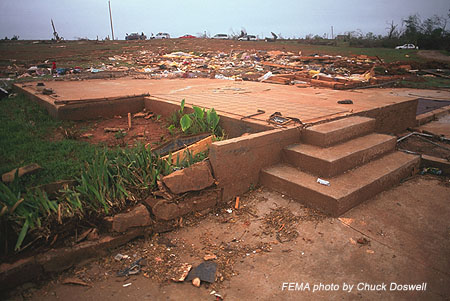
That all depends on how big the storm is and how fast its winds are whipping around.The Fujita scale, named for the scientist who developed it, ranks tornado strength based on the damage they cause. The scale runs from F0 to F5; the most violent tornadoes, F4 and above, account for less than 1 percent of all tornadoes, but account for 70 percent of tornado-related deaths.
These terrifying twisters can level a house and lift up a car and fling it 100 yards away. F2s and F3s can tear off roofs, destroy mobile homes and lift cars off the ground. F0s and F1s will break tree branches, damage signs and take off a few roof shingles.
7. What's the difference between hurricane and tornado damage?
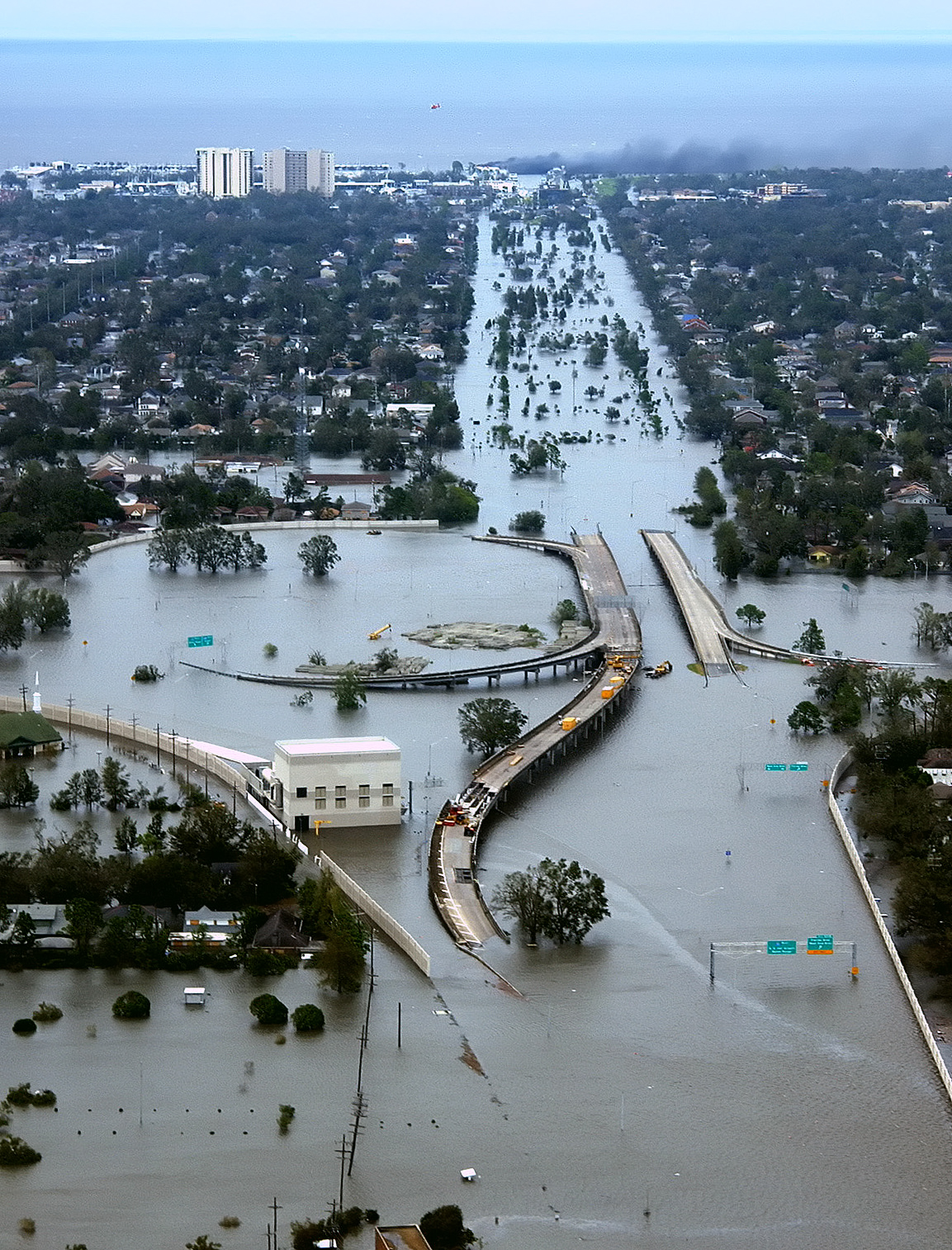
It's mostly a matter of scale. Tornadoes have much higher wind speeds, so most of the damage wrought by them is wind-related. But they are much smaller and so cause damage over a smaller area than hurricanes. Most damage from hurricanes comes from flooding and storm surge.
8. What was the deadliest tornado outbreak?
The deadliest outbreak came on April 3, 1974, when a two-day "Super Outbreak" of 147 tornadoes killed 308 people in 13 states.
The deadliest single tornado was the "Tri-state" tornado that killed 695 people along a 219 mile long track across parts of Missouri, Illinois and Indiana on March 18, 1925.
9. What city has been hit by the most tornadoes?
Oklahoma City has been hit by a staggering 100 tornadoes; the earliest recorded tornado there was in 1893. The most-hit city count can change based on how city limits are defined, but when considering a 20-mile radius around a city of 100,000 or more, Oklahoma City is in the lead, followed by Huntsville, Ala.
10. What is the highest elevation a tornado has occurred at?
This isn't known for sure, but scientists with the National Weather Service say it is at least over 10,000 feet above sea level.
The NWS website lists a tornado observed and photographed by a hiker at 12,000 feet in Sequoia National Park, California, on July 7, 2004, as the likely candidate for highest elevation tornado known.
The highest altitude ever recorded for a violent tornado was between 8,500 and 10,000 feet elevation in Wyoming — an F4 tornado struck there on July 21, 1987.
11. How do I prepare for a tornado?
Keep abreast of local weather forecasts and listen for watches and warnings. Having a weather radio in the house is also a good idea.
Have a family plan in place so you can quickly find shelter. Basements and storm cellars are the best place to take shelter, but if you don't have either one, head to a bathroom, closet or any other interior rooms away from windows.
Don't bother opening windows to equalize the pressure in the house — it's a waste of time and the tornado will take care of that for you if it does hit your house.
If you're in a car, get out and head for sturdy shelter or a low, flat spot. Don't take shelter under a bridge, which is highly dangerous.
12. What's the difference between a tornado watch and a tornado warning?
A tornado watch defines an area (usually displayed on meteorologists' maps) where tornadoes and other kinds of severe weather are likely in the next few hours. If you're in such an area, be alert.
A warning means that a tornado has been spotted or that radar has shown circulation in a storm that could spawn a tornado. Warnings mean you should seek shelter immediately.
Recognition of tornadic damage
Neil Stuart (presently at the Wakefield, VA office of the National Weather Service) has raised some interesting points via e-mail correspondence. In some cases, there is very strong horizontal wind shear in storms (even tropical cyclones) ...

The wind speeds associated with such wind shear can attain damaging values and so create damage paths. Obviously, this is true for thunderstorms, since they produce strong outflows (often called downbursts). Along the flanks of a downburst, strong horizontal gradients of the wind can be found, and such shears can be associated with substantial vorticity (both cyclonic and anticyclonic).
In theory, such "sheets" of horizontal wind shear are unstable and should "roll up" (Fig.1) into a series of discrete vortices; in the process, the shear line's vorticity (originally spread out along the line) becomes concentrated into a number of vortices.
Ref resources:
cimms.ou.edu
livescience.com